





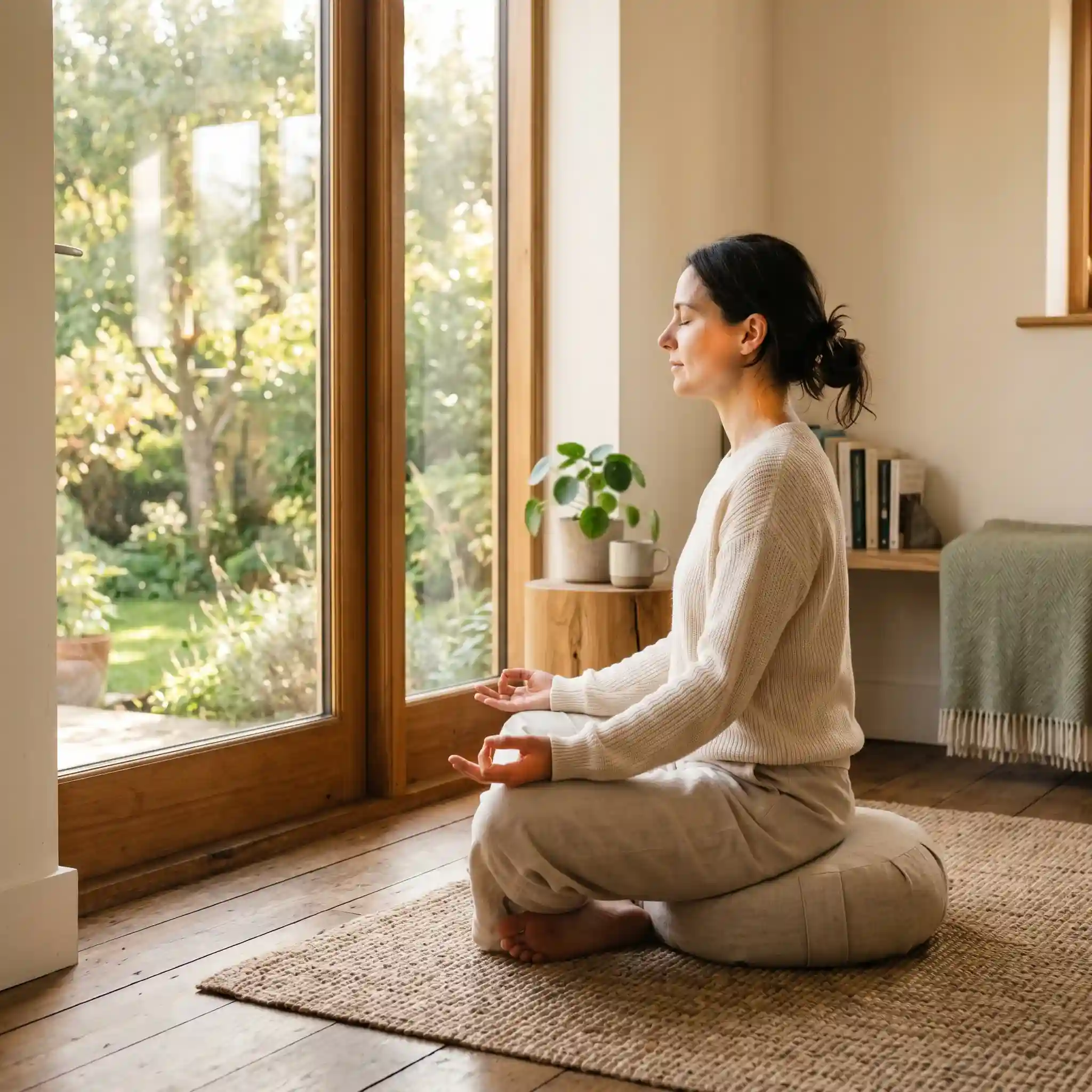


Introduction
There are mornings when you open your eyes and already feel behind. The day hasn’t even started, but your chest is tight, your mind is already running through everything you haven’t done, and the idea of getting up feels heavier than it should.
If that’s been you lately, I want you to know something: that feeling is more common than most people admit out loud.
What I’ve seen, both professionally and in conversations with people navigating real life, is that most of us wait until we’re completely depleted before we do anything about how we’re feeling. We treat mental health like a car engine. We ignore it until it stops working.
But here’s the thing. You don’t need to be in crisis to deserve care. And you don’t need a dramatic lifestyle change to start feeling meaningfully better. Some of the most effective mental health tips for daily life are almost embarrassingly simple. The hard part isn’t finding them. It’s actually doing them, consistently, on ordinary days.
That’s what this article is about.
Why Daily Mental Health Habits Matter
Most people think about mental health in terms of big events. A breakdown. A diagnosis. A really bad period. But your emotional state isn’t just shaped by the big things. It’s shaped by the small, repeated choices you make every single day, most of which happen almost automatically.
The time you go to bed. Whether you eat breakfast or skip it. How you talk to yourself when something goes wrong. How often you actually stop and breathe.
These things add up. The relationship between stress and mental health isn’t abstract. Chronic stress, the low grade, background kind that most people just accept as normal, gradually wears down your emotional resilience. It affects your sleep. It changes how you react to people you love. It makes the ordinary harder than it needs to be.
What I tell people is this: you don’t build good mental health the way you’d plan a vacation. You build it the way you build any physical habit. Slowly, imperfectly, one small decision at a time.
Signs Your Mental Health May Need Attention
One of the trickiest things about mental health is that the warning signs are easy to explain away. You tell yourself you’re just tired. Just busy. Just going through a rough patch.
Sometimes that’s true. But some signs of bad mental health are worth taking more seriously, especially when they stick around:
- You’re exhausted even after sleeping, like rest stopped doing its job
- Small things are setting you off in ways that surprise even you
- You’ve stopped looking forward to things you used to enjoy
- Focusing on anything feels harder than it should
- Sleep is all over the place, too little, too much, or just restless
- You’ve been pulling back from people without quite meaning to
None of this means something is terribly wrong. But your mind and body tend to give you signals before things escalate. Learning to notice them early is genuinely one of the most useful skills you can develop.
10 Easy Ways to Improve Your Mental Health Daily
1. Start Your Day With a Simple Routine
I’m not talking about a 90 minute morning ritual. I’m talking about something small and repeatable. A glass of water before your phone. Five minutes of quiet before the noise begins. Even making your bed.
The reason routines help is that they create a sense of predictability in the morning, and predictability is surprisingly calming to the nervous system. When your day starts with intention, even a tiny amount of it, your baseline stress level tends to stay lower.
2. Get Some Sunlight and Fresh Air
This one sounds almost too simple, but it works. Natural light in the morning helps regulate your body’s internal clock, which affects your mood, your sleep quality, and your energy levels throughout the day.
You don’t need much. Ten to fifteen minutes outside, or even near a bright window, can make a real difference. If you’ve been spending whole days indoors without noticing, this is worth trying before anything else.
3. Practice Gratitude
I know gratitude journaling gets mocked sometimes. But here’s why it actually matters: your brain has a negativity bias. It naturally pays more attention to what’s going wrong than what’s going right. That made sense evolutionarily. It doesn’t serve you especially well in modern daily life.
Deliberately writing down two or three things you’re grateful for, even tiny things, interrupts that bias. It doesn’t erase problems. It just keeps your brain from treating every problem like the only thing that exists.
4. Stay Physically Active
Movement is one of the most reliable stress relief techniques we have, and you don’t need a gym to access it. A 20 minute walk. Some stretching on your bedroom floor. Putting on music and moving around your kitchen.
Exercise reduces cortisol, raises endorphins, and gives your mind something to do that isn’t worrying. Even on days when motivation is low, a short walk tends to return more than it costs.
5. Limit Screen Time, Especially in the Evening
Scrolling feels like relaxing. Physiologically, it usually isn’t. The combination of blue light, social comparison, and unpredictable content keeps your nervous system in a low grade alert state, which is the opposite of what you need in the hours before sleep.
A simple experiment: put your phone down an hour before bed for one week. See what happens to how quickly you fall asleep and how you feel in the morning.
6. Connect With Someone You Trust
Genuine human connection is one of the most underused mental health tools most of us have access to for free. Not a long, heavy conversation necessarily. Just a real one. Where someone actually listens and you actually feel less alone.
When things are hard, isolation tends to feel like self protection. In most cases it makes things worse. If you’ve been withdrawing lately, reaching out to one person this week is a better intervention than almost anything on this list.
7. Practice Mindfulness or Deep Breathing
You don’t need a meditation practice or an app or a quiet room. You need about 60 seconds and your own breath.
The 4 7 8 technique works well for anxiety management: inhale for four counts, hold for seven, exhale for eight. Do it three times. It activates your parasympathetic nervous system, which is the part of you responsible for calming down. It sounds small. It isn’t.
8. Maintain a Healthy Sleep Schedule
If I had to pick one habit with the highest impact on overall emotional well being, it would be this one. The connection between sleep and mental health runs deeper than most people realize.
A single night of poor sleep reduces your emotional regulation by a measurable amount. Chronic poor sleep gradually erodes your resilience to stress, your patience, your ability to think clearly, and your mood in ways that are easy to mistake for personality or circumstance.
Going to bed and waking up at roughly the same time, every day including weekends, is not glamorous advice. It’s also genuinely effective.
9. Eat Balanced Meals
You don’t need a nutritionist or a meal plan. You need to eat regularly and not run on caffeine and convenience food for weeks on end.
Your brain runs on glucose. When blood sugar is unstable, so is your mood. When you’re dehydrated, your thinking gets foggy and your stress response gets louder. Basic, consistent nutrition isn’t a cure for anything, but poor nutrition is a quiet amplifier of almost every mental health challenge.
10. Take Short Mental Breaks Throughout the Day
Your attention isn’t infinite. Working or studying in long unbroken stretches depletes your cognitive resources and raises your stress baseline gradually throughout the day. You often don’t notice until you’re snapping at someone or staring at a screen unable to process a single sentence.
A five to ten minute break every hour or so, away from screens, resets things. It sounds counterproductive. It actually makes the rest of your time more effective.
Mental Health Care at Home
Mental health care at home isn’t a clinical concept. It’s just about creating an environment where you can actually recover from the demands of your day.
A few things that make a real difference:
- Keeping your space reasonably tidy. Clutter increases cognitive load in a quiet, persistent way
- Having somewhere comfortable to sit that isn’t your work chair or your bed
- Building some kind of wind down ritual in the evening, even 15 minutes, before sleep
- Keeping a simple journal. Three sentences is enough. What happened, how you felt, one thing you’re grateful for
- Being thoughtful about what you let into your mental space in the last hour of the day, news, arguments, heavy conversations
None of this is complicated. But it takes a little intention. Most people’s home environments are accidentally designed to keep them stimulated and stressed. This is just about gently reversing that.
Understanding Anxiety and Depression (Beginner Level)
Anxiety Management
Anxiety is your nervous system doing its job. It’s meant to alert you when something needs attention. The problem for a lot of people is that the alert system gets stuck in the on position, firing even when there’s no actual threat.
You might recognize it as a racing mind that won’t quiet down at night. A body that stays tense even when you’re sitting still. A tendency to catastrophize small things before you even realize you’re doing it.
Day to day anxiety management doesn’t have to be complicated. Controlled breathing genuinely helps. So does reducing caffeine, maintaining a routine, writing down your worries rather than circling them in your head, and being honest with yourself about what’s actually in your control versus what isn’t.
Depression Basics
Depression doesn’t always look like sadness. A lot of the time it looks like flatness. Like things that used to matter have stopped mattering. Like going through the motions of a life you feel disconnected from.
Early signs are worth taking seriously, because depression responds better to early support than it does to being endured quietly for months. If you’ve felt this way for more than two weeks, and especially if it’s affecting how you function day to day, talking to someone is worth more than anything else on this list. That starts with a trusted friend and, when needed, a professional.
There is nothing weak about getting support for depression. It’s one of the most common and most treatable conditions there is.
Common Mistakes People Make With Their Mental Health
Treating emotions like inconveniences. Suppressing what you feel doesn’t resolve it. It tends to store it, and it resurfaces later in harder forms. Acknowledging a feeling, even just privately, is the first step toward processing it.
Waiting to feel motivated before starting. Motivation usually follows action, not the other way around. Starting before you feel ready is almost always the right call.
Isolating when things get hard. It feels protective. It rarely is. Connection is often the thing that actually helps, and it’s usually the first thing people cut off.
Expecting linear progress. Healing and improvement aren’t straight lines. Bad days after good ones don’t mean the good ones didn’t count.
When to Seek Professional Help
Everything in this article can help. But there are points where self help genuinely isn’t enough, and recognizing those points matters.
Reach out to a therapist, counselor, or your doctor if:
- You’ve felt persistently low, anxious, or numb for more than two weeks
- Your daily functioning, work, relationships, basic tasks, has been noticeably affected
- You’re using substances more than usual to manage how you feel
- You’re having any thoughts of harming yourself
This isn’t the last resort. This is just what appropriate care looks like for what you’re dealing with. A good therapist isn’t going to judge you for what’s brought you there. That’s not what they do. If cost or access is a barrier, starting with your GP is a completely legitimate first step.
Frequently Asked Questions
How can I improve my mental health daily?
Start with one thing, not ten. Pick a single habit from this article, something small and realistic, and do it consistently for two weeks. Mental health tips for daily life only work when they’re actually practiced. A daily walk or a consistent bedtime will do more than a complicated routine you abandon after three days.
What are early warning signs of mental health issues?
Persistent tiredness, unusual irritability, disrupted sleep, social withdrawal, and difficulty concentrating are common early signs. They don’t necessarily mean something serious is developing, but they’re signals worth paying attention to rather than explaining away.
Can small habits really make a difference?
They can, and they do. The research on this is pretty consistent. Daily, repeated behaviors shape your emotional baseline more than occasional dramatic interventions. The habits feel small in the moment. Over weeks and months, they create real change.
How does sleep affect mental health?
More than most people expect. Sleep is when your brain processes emotion and consolidates memory. When sleep and mental health are both struggling, they tend to make each other worse. Fixing your sleep schedule won’t solve everything, but it removes a significant obstacle from everything else you’re trying to do.
What if I don’t have time for all of these habits?
You don’t need all of them. Two or three consistent habits will do more than ten sporadic ones. Pick what fits your actual life, not an idealized version of it. Five minutes of intentional breathing, a short walk, one real conversation. That’s enough to start.
Conclusion
The people I’ve seen make real, lasting improvements to their mental health rarely did it through a single breakthrough. They did it by making small, imperfect choices, day after day, until those choices became the fabric of how they lived.
You don’t have to have it all figured out. You don’t have to wait until things get bad enough to deserve help. You don’t have to be consistent every single day.
You just have to keep coming back to it.
Pick one thing from this article. Try it this week. That’s the whole instruction. Read more